


Metal Roof Replacement Pros and Cons to Consider Before You Buy
Thinking about a metal roof? You’re not alone. Many homeowners are drawn to its sleek looks and durability, but is it the right choice for you? Before you dive in, let’s unpack the pros and cons. Considering energy savings, easy upkeep, budget issues, and installation difficulties can help you save both time and money. Stay to learn the most important things you should consider before making a big decision!
What is Metal Roofing?
Metal roofing encompasses a variety of materials including aluminum, steel, and copper, each offering unique benefits and characteristics.
Aluminum is light, doesn’t rust, and works well near the sea, but it can dent easily.
Steel, available as galvanized or Galvalume, is a strong and often affordable option, making it a common choice for homes.
Copper, while aesthetically appealing and long-lasting, comes with a higher price tag and can develop a green patina over time.
Knowing the characteristics of these metal roofing types helps choose the right roofing for different climates and building designs, which affects how long they last and how much upkeep they need.
Why Consider Roof Replacement?
Thinking about getting a new roof is important, especially if your current one is old, damaged, or if you want to improve energy savings.
Homeowners should evaluate their roof’s condition and consider options like asphalt shingles, metal roofing, or tile, keeping in mind factors like roofing materials and insulation. Each material affects home value differently; for instance, metal roofing can increase resale value by up to 6% and provides better insulation, potentially lowering energy bills by 20%.
If your roof is over 20 years old or shows signs of leaks, opting for a replacement can prevent more significant structural issues down the line. Getting a professional to check your roof will give you specific advice and choices for spending your money.
Pros of Metal Roof Replacement
Metal roofs have many advantages compared to regular roofing materials, which makes them a good choice for homeowners. For instance, they are known for their durability and longevity. What is the longest lasting roof material?

Durability and Longevity
Metal roofs can last between 40 to 70 years, significantly outlasting traditional asphalt roofs, which typically last 15-20 years.
For homeowners looking for long-lasting options, metal roofs often have coatings that prevent rust and damage, which is especially important in coastal regions. Brands like Galvalume provide a 50-year warranty, ensuring long-term protection.
Materials such as zinc and aluminum are popular for their lightweight properties and energy efficiency. In extreme weather, metal roofs work very well. They help snow fall off and resist strong winds, making them ideal for places with harsh weather.
Regular maintenance, like inspecting seams and fasteners, can further extend their lifespan.
Energy Efficiency
Metal roofs reflect the sun’s heat, which can reduce your air conditioning costs by 10-25%. This makes them a good choice for warmer regions.
Plus lowering energy expenses, metal roofs also boast a lifespan of 50 years or more, significantly outlasting traditional shingles.
For example, a standing seam metal roof is strong and can include extra insulation to make it more energy-efficient. Homeowners can look into materials such as Galvalume or aluminum for the best reflection qualities, often found at local suppliers or home improvement stores, which offer energy efficiency and longevity.
Implementing a metal roof can yield considerable savings on both cooling bills and maintenance in the long term. Curious about how much a metal roof replacement might cost? Our detailed guide provides insights into budgeting effectively for this durable investment.
Low Maintenance Requirements
Compared to traditional roofing, metal roofs require significantly less maintenance, often necessitating only periodic inspections and cleaning.
Typically, you should inspect your metal roof twice a year, looking for any loose panels or rust spots. Clean gutters and downspouts to prevent water accumulation, and remove debris from the roof surface regularly.
If you notice any scratches or dents, apply touch-up paint to protect against corrosion and rust. These simple steps can save you money on repairs or replacements, making metal roofing a good choice for homeowners who want a long-lasting and easy-to-maintain option.
Environmental Benefits
Metal roofing is often made from recycled materials and can itself be recycled, reducing landfill waste and resource consumption.
In fact, more than 90% of steel roofing can be repurposed, contributing significantly to reducing overall waste.
Metal roofs reflect solar radiant heat, which can lower energy costs by up to 25% during summer months. This energy efficiency helps homeowners spend less on utility bills and reduces the strain on power plants, which also conserves natural resources.
The lifespan of metal roofing often exceeds 50 years, minimizing the need for frequent replacements and construction waste over time.
Aesthetic Appeal
Metal roofing comes in different colors and designs, making it easy for homeowners to improve their home’s appearance and match any design choice.
Homeowners can select colors such as deep red, slate gray, or bright green to match their exterior, enhancing curb appeal and aesthetic options.
For a traditional look, opt for standing seam panels, while corrugated sheets lean towards a more rustic aesthetic.
Pairing metal roofs with accent colors on trims and shutters can create a striking contrast.
Tools such as the Color Visualizer by Sherwin-Williams allow you to experiment with different palettes digitally.
Keep in mind that wise decisions make things look better, save power, and last longer.
Cons of Metal Roof Replacement
Metal roofs have benefits, but they also have some downsides that homeowners need to think about before choosing them. For instance, the cost of metal roofing can vary significantly depending on the material chosen. Learn more about the cost differences between various roofing materials and make an informed decision.
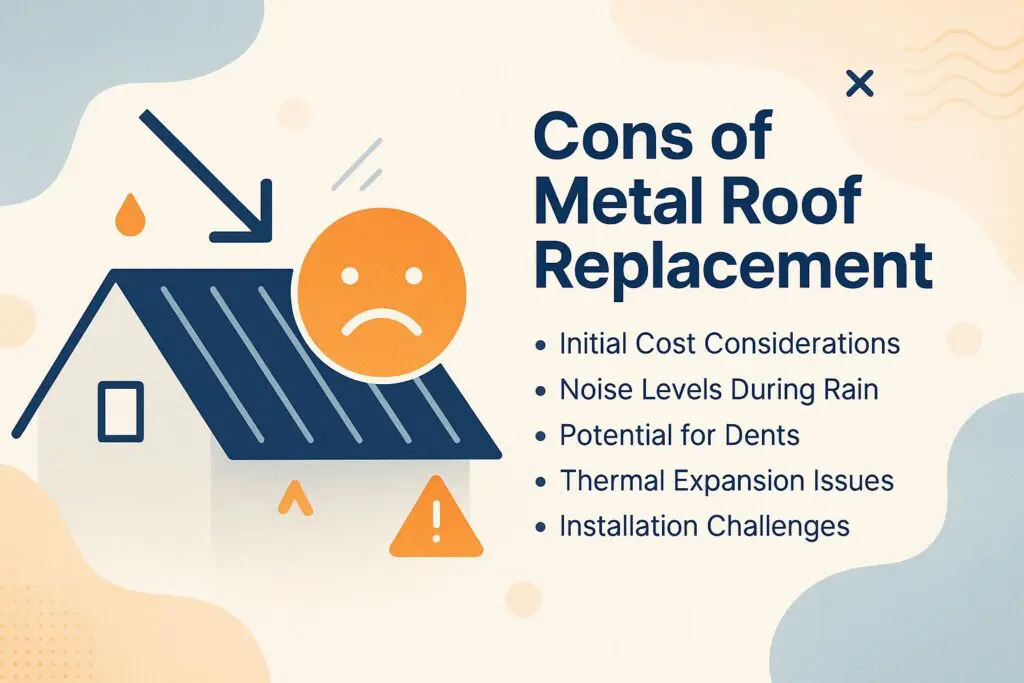
Initial Cost Considerations
The initial cost of metal roofing can range from $120 to $900 per square, significantly higher than traditional materials like asphalt.
The long-term value often justifies the investment. Metal roofs can last between 40 and 70 years, whereas asphalt roofs typically require replacement every 15 to 30 years.
Tools like an online calculator can help estimate total costs, considering lifespan, initial investment, and potential energy savings. You can choose from various payment plans. Some companies provide loans with low interest rates or offer cash-back deals to help reduce initial costs.
When looking at your choices, think about both the short-term and long-term benefits to choose the best investment for your home.
Noise Levels During Rain
Metal roofs can be noisier than traditional roofing materials during rain or hail, which may be a concern for some homeowners.
To mitigate noise, consider adding insulation and underlayment beneath the metal roof. Rigid foam board or spray foam can effectively dampen sound and improve energy efficiency.
Installing a sound-absorbing underlayment, such as cork or rubber, can significantly reduce impact noise. To get good results, make sure the roof is securely attached to reduce vibrations.
Each of these solutions offers both sound dampening and thermal benefits, addressing homeowner concerns while maintaining the longevity and aesthetic appeal of metal roofing.
Potential for Dents
Metal roofs can be susceptible to dents from hail or falling branches, although some materials offer greater resistance.
Thicker gauge steel, such as 24-gauge or 26-gauge, is significantly more resistant to dents compared to thinner options. For better protection, think about aluminum roofing. It is strong and light, which means it is less likely to get damaged by impact.
Installing a protective barrier like a rubber mat or rubber padding can absorb shocks from falling debris. Regular maintenance, including trimming overhanging branches, also minimizes the risk of denting.
Homeowners can keep their roof strong and durable by choosing the right materials and using methods to stop problems before they start, ensuring fire resistance.
Thermal Expansion Issues
Thermal expansion can cause metal roofing to warp or buckle if not properly installed, resulting in potential leaks.
To lower these risks, install expansion joints every 20 feet. It’s important to use screws meant for metal roofs instead of regular nails for proper fastening.
Make sure fasteners are placed 12 inches apart along the seams to allow for expansion, adhering to building codes and local regulations. Consider implementing a thermal break, such as a layer of insulation, which can help absorb heat fluctuations.
Together, these techniques greatly increase the durability and dependability of your metal roofing system.
Installation Challenges
Putting in metal roofing needs specific skills and tools, so it’s important to hire contractors with experience for the best outcome.
When choosing a contractor, make sure they can show examples of past metal roofing work. Ask about their installation methods and if they offer warranties on labor and materials.
It’s important to check that they have the proper licenses and insurance. Requesting estimates from at least three roofing contractors can help you compare prices and services.
Check online reviews and local references to gauge their reliability. Choosing the right options can greatly improve your roofing project and make sure it lasts a long time.
Factors to Consider Before Replacement
It’s important to think about a few key points before choosing to replace a metal roof, such as climate suitability and project budget, so that you make a wise choice. For an extensive analysis of this trend, our Ultimate Roof Replacement Budgeting Guide for 2025 examines these factors in detail.

Climate and Weather Conditions
The local climate plays a significant role in determining if metal roofing is the right choice, especially regarding heat and moisture.
Metal roofs excel in areas with extreme weather conditions. In humid areas such as Florida, galvanized steel stands up well against rust and corrosion, remaining durable even in high moisture conditions, which can increase property value.
In contrast, aluminum roofing is ideal for coastal areas, such as California, due to its ability to withstand salty air without deteriorating. Copper roofing is also a great option for such areas due to its durability. In northern climates prone to heavy snowfall, standing seam metal roofs are preferred as their design allows for efficient snow shedding, preventing ice dam issues and managing snow load effectively.
Consider your local conditions and the weather resistance when selecting the appropriate metal type for residential roofing or commercial roofing.
Building Codes and Regulations
Before replacing your roof, check the local building codes and rules. These differ by area and affect the installation method and product choices.
- Start by visiting your local government’s building department website, which often provides specific codes for roofing materials.
- Tools like the International Code Council (ICC) offer resources to understand national standards. Consult your state’s website for any regional regulations.
- Local roofing contractors can provide useful information because they usually know the specific regulations in your area.
- Remember to check for any permit requirements, as failing to adhere can lead to costly fines and complications during project completion.
Roof Structure and Design
The current roof must be checked to see if it can hold a metal roof, especially with considerations for siding compatibility., particularly heavy materials like steel.
Begin by checking the framing layout, typically a truss or rafter system, to assess its load-bearing capacity and wind resistance. Use the calculations from a structural engineer to confirm that the evaluations are accurate, focusing on the dimensions and distances between the beams.
For instance, 2×6 rafters spaced 24 inches apart can handle certain metal roofs well. Make sure the current building’s design matches the angle and material of the new roof, considering slope considerations and roof pitch, since some metals can bounce heat or cause problems with temperature changes.
Adequate ventilation should also be integrated to prevent moisture buildup, promoting longevity.
Insurance Implications and Homeowner Insurance
Installing a metal roof can impact your homeowner’s insurance, potentially leading to lower premiums due to increased durability and fire resistance.
To communicate effectively with your insurance provider about these changes, begin by gathering relevant documentation, including expert opinions and consumer reviews. This includes proof of installation, such as invoices or contractor statements, and any warranties associated with the new roof.
Contact your insurer directly or log into their online portal to report the upgrade. Get ready to explain how the metal roof improves the safety of your home, as an inspection might be needed.
Following these steps can help secure premium adjustments, leading to potential savings over time and influencing insurance claims positively.
Weighing the Pros and Cons
It’s important for any homeowner thinking about replacing their roof to weigh the major advantages of metal roofing against the possible downsides.
Metal roofing has many benefits, including a long lifespan, saving energy, and standing up well to bad weather, contributing to sustainability and reducing maintenance costs.
For example, a high-quality metal roof can last 40-70 years, which reduces the need for frequent replacements. Reflective coatings can lower cooling costs by up to 25%, improving heat reflectivity.
It’s important to consider drawbacks such as higher upfront costs-typically 10-15% more than asphalt shingles-and potential noise during rain or hail, although noise reduction techniques can be applied. Considering these aspects will help you determine whether the long-term savings, including financial incentives and tax credits, are greater than the initial costs.
Making an Informed Decision
In the end, choosing metal roofing means thinking about what you like, how much you want to spend, and local conditions.
Start by evaluating the various types of metal roofing available, such as standing seam, corrugated panels, or metal shingles.
Standing seam provides a sleek look and is great for water drainage, while corrugated panels are often more cost-effective and easier to install.
Next, consider local climate conditions; for instance, areas with heavy snowfall might benefit from materials that resist accumulation.
Budget is important; prices can go from $3 to $12 per square foot, so check your finances carefully.
Consulting with a roofing professional can further clarify your options, including customization and color options.
Additional Resources
For additional help with replacing metal roofs, you can find plenty of resources to help you choose the right materials and contractors, such as market comparisons and buyer’s guides.
Contacting Professionals and Expert Opinions
Connecting with reputable roofing professionals is essential for ensuring quality installation and adherence to local building codes, impacting installation guarantees and customer satisfaction.
To select the right contractor, start by asking these key questions during consultations:
- What is your experience with my type of roofing?
- Can you provide references from previous clients?
- What warranties do you offer on materials and workmanship?
Make sure you look at their license and insurance papers. Professional setup follows building rules and local standards. Look for contractors who use high-quality materials, such as asphalt shingles or metal roofing, and explain their installation methods clearly.
A trustworthy contractor will be transparent about timelines and costs, including labor costs and installation timeframe, helping you make an informed decision.

About the Author
I’m Tim Hauser, a graduate of Arizona State University with a Bachelor of Science in Construction Management. I’ve owned and operated a successful roofing company in Arizona for over 20 years, specializing in storm damage repairs, roof replacements, and helping homeowners navigate insurance claims. As a contributor to Best Roofing Estimates, I’m here to help you protect your biggest investment—your home—with knowledge you can trust.
Leave a Reply