


Buying a Home With an Old Roof: What You Need to Know Before Closing
An old roof can hide more than just a few leaks; it can signal potential headaches ahead, impacting both the buyer’s checklist and home safety. As a homebuyer, it’s important to know the roof’s condition for both your comfort and your finances. You’ll learn how to identify signs of damage, which checks are most important, and how to handle financial effects. Learn about the implications of purchasing a home with an aging roof and ways to safeguard your investment, taking into account ongoing expenses and later costs.
Importance of Roof Condition in Home Buying Process
A deteriorating roof can lead to significant safety issues and costly repairs, emphasizing the need for buyers to assess this aspect before closing, considering financing options and renovation budget.
Compromised roofing often results in leaks, which can cause mold growth and threaten the structural integrity of a home, impacting home value assessment. In fact, a study reveals that 30% of buyers encounter roof-related problems shortly after purchase.
To avoid this, potential buyers should inspect for:
- Missing shingles
- Water stains
- Sagging areas
Engaging a certified roofing inspector can provide a professional assessment which typically costs between $200 and $400, but it is a small investment compared to the potential repair costs that could exceed $10,000, impacting both property appraisal and home equity. To further understand the costs involved, you might want to explore our Roof Replacement Cost Guide, which offers detailed insights into average prices and budgeting considerations.
Overview of the Home Buying Process
The home buying process consists of multiple stages, including negotiation, inspection, and closing process, each with its own set of challenges.
One critical aspect is the home inspection report, especially concerning the roof. Hire an experienced inspector to see if it’s in good condition and find any damage, wear, or past repairs, impacting buyer responsibilities.
For negotiation strategies, be prepared to request repairs or price reductions based on the inspection findings. Using tools like Zillow or Redfin can help you assess the home’s value and compare it with similar listings, impacting market analysis.
Always try to fix any roof problems before closing the deal, as this can save you a lot of money over time.
Want real numbers for your own roof? Compare free quotes from licensed local roofers. No obligation, and it takes about a minute.
Knowing the Age and State of the Roof for Buyers to Do Proper Research
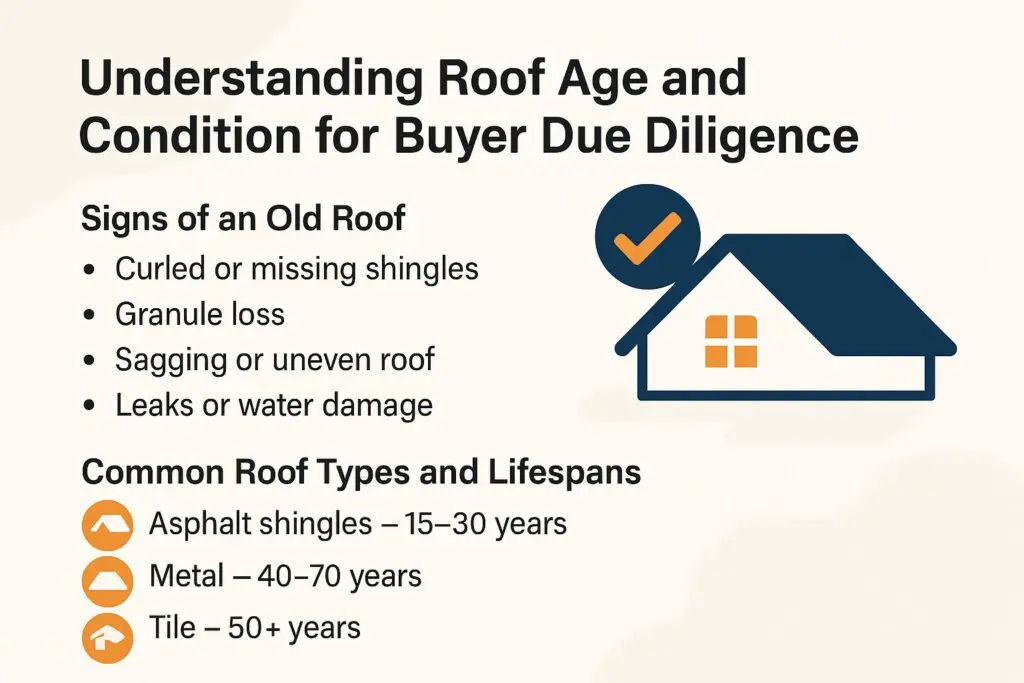
Knowing how old the roof is and its current state is important for buyers since these details influence the property’s value and the expenses for maintenance costs.
Signs of an Old Roof
Common signs of an aging roof include missing shingles, sagging, and the presence of moss or algae, indicating potential underlying issues.
Look for signs like granules missing from shingles, which can lead to worse damage during storms, and leaks in the attic or on ceilings.
If you notice water stains or dampness, this could signal that your roof’s protective barrier is compromised. Dark streaks or a constant musty smell might indicate mold, while too much wear on flashing can cause roof problems.
Regular checks and quick fixes are necessary; think about using a moisture meter for exact readings, affecting property value and selling price.
Common Roof Types and Lifespans
Different roofing materials have varying lifespans, such as asphalt shingles lasting 20-25 years and metal roofs lasting 40-70 years.
Other popular options include tile roofing, which can last over 50 years, and wood shakes, typically lasting 25-30 years.
Asphalt shingles are economical but may require more frequent replacements due to their susceptibility to weather damage. In contrast, metal roofing offers durability and energy efficiency but comes at a higher initial cost.
Tile roofs are long-lasting and aesthetically appealing, though heavier and more expensive.
When choosing roofing materials, think about the weather in your area, your spending limit, and the design of your house to make the right decision, impacting curb appeal and energy efficiency.
Inspection Considerations

Checking the roof carefully is important for the property’s safety and to prevent unexpected costs after buying, impacting quality of life and budget considerations.
Hiring a Professional Inspector
Hiring a certified inspector might cost you between $300 to $500. Their skills can help you avoid costly repairs later on.
To find a good inspector, start by asking real estate agents for suggestions or checking online reviews.
Look for certifications from organizations like the American Society of Home Inspectors (ASHI) or the International Association of Certified Home Inspectors (InterNACHI).
During the interview, ask about their experience with properties similar to yours and request sample inspection reports.
Make sure they have insurance and know local building regulations well. This thorough vetting can help prevent costly surprises in your property investment.
Key Areas to Inspect
While checking the roof, pay attention to important parts like the flashing, gutters, and ventilation systems for a thorough check.
Checking flashing is critical because it covers joints and stops leaks; check for rust or openings.
Gutters should be clear of debris to allow proper drainage-use a garden trowel for cleaning and a hose to test flow.
Examine the ventilation system; blocked vents can lead to moisture buildup.
To help with this, use a handheld mirror to look at difficult-to-see spots and think about using a drone for a bird’s-eye view, especially on steep roofs.
By following these steps, you can identify significant issues earlier.
Understanding Inspection Reports
An inspection report details the condition of the roof and might offer repair cost estimates, aiding in informed decisions during negotiations.
Buyers need to pay attention to terms like ‘active leaks,’ which mean problems that need fixing right away, or ‘minor repairs,’ which imply less urgent and cheaper solutions.
For example, an estimate of $500 for minor repairs may allow for negotiations, whereas active leaks with a $5,000 repair estimate could necessitate significant price adjustments.
Knowing what ‘life expectancy’ means can help determine when a roof might need to be replaced. If a roof only has five years left, it could be a major factor in deciding whether to buy or might lead to price discussions.
Thinking about these points can help you make informed decisions.
Financial Implications
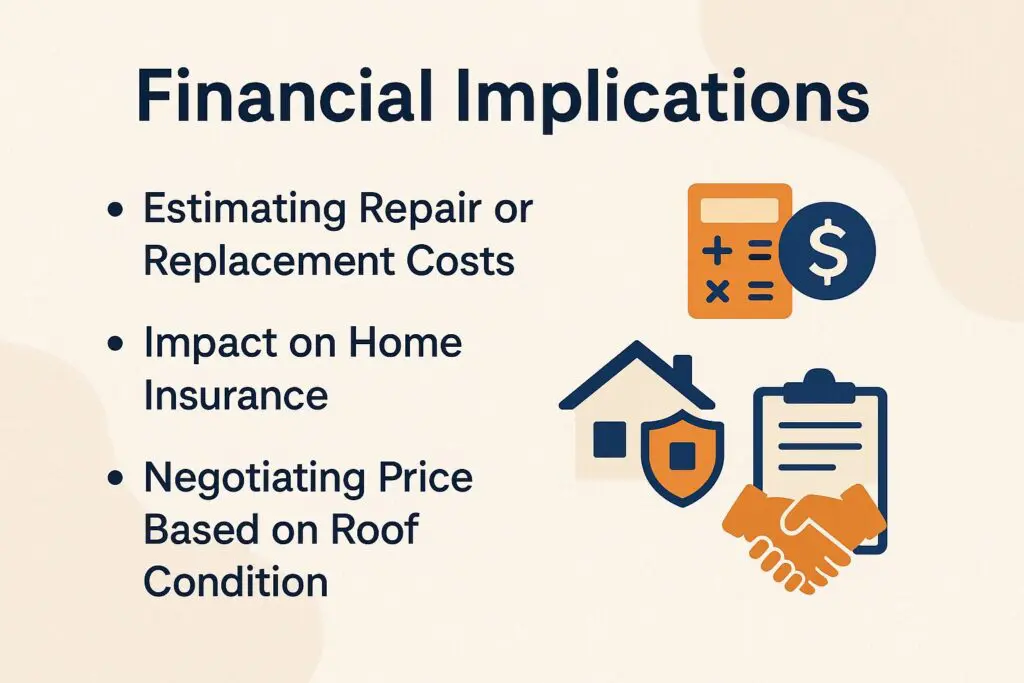
Knowing the effects of roof condition on finances helps buyers avoid surprise expenses and plan their budget properly.
Estimating Repair or Replacement Costs
Estimating roof repair costs can range from $300 for minor repairs to $15,000+ for complete replacement, depending on the materials and extent of damage.
To get accurate cost estimates, contact several roofing companies for quotes and think about these points:
- the pitch of your roof,
- the type of material (asphalt, metal, tile),
- and the overall square footage.
For example, asphalt shingles typically cost $90-$100 per square (100 square feet), while metal roofs can run $300-$700 per square. Also, investigate local building codes and potential labor costs, which can vary significantly by region.
Websites such as HomeAdvisor or Angie’s List show typical costs, helping you compare them easily.
Impact on Home Insurance
A roof in poor condition can lead to higher home insurance premiums or even denial of coverage, significantly affecting overall costs.
Specifically, homes with roofs older than 20 years may see premiums increase by 25% or more. To mitigate these risks, consider scheduling a professional roof inspection to identify and address issues like missing shingles or leaks.
Many insurers offer discounts for well-maintained roofs, so investing in repairs can translate into savings. Keeping documentation of repairs and maintenance can strengthen your case when negotiating coverage terms.
Looking after your roof early on safeguards your house and may lower your insurance costs.
Negotiating Price Based on Roof Condition
Using inspection findings, buyers can negotiate a price reduction of 1% to 3% of the home value to account for necessary roof repairs.
To make the most of the inspection report, begin by listing the problems found, like leaks or missing shingles, and get price quotes for repairs from local builders. This data becomes your negotiation tool.
For instance, if the home is valued at $300,000 and repairs are estimated at $5,000, proposing a reduction of $3,000 could reflect the necessity of addressing these concerns.
Always present your evidence clearly and stay firm on the impact these issues could have on property value to strengthen your position.
Legal Considerations
Knowing the legal issues related to roof conditions can help buyers avoid unexpected costs and problems.
Disclosure Requirements
Sellers must tell buyers about any roof problems they know about, as this can affect the buyer’s view and decisions, fulfilling seller obligations and disclosure requirements.
In many states, specific disclosure laws require sellers to outline any known roof problems, such as leaks or structural damage. For instance, California mandates sellers to complete a Transfer Disclosure Statement that includes roof conditions.
Failure to disclose this information could lead to legal action, as seen in a recent case where a seller was fined $50,000 for not revealing significant roof repairs. To avoid such pitfalls, sellers should consider hiring a licensed inspector to assess the roof and provide a written report that can be shared with potential buyers.
Understanding Warranty Options
Homeowners can usually get home warranties for roof repairs that cover a period of 10 to 25 years, providing financial security and affecting both insurance claims and upcoming repairs.
These warranties typically fall into two categories: manufacturer warranties and workmanship warranties.
Manufacturer warranties cover defects in the roofing materials themselves, often lasting 20 to 50 years. For example, a GAF roofing system may include a warranty that covers material failures.
On the other hand, workmanship warranties, offered by contractors, protect against improper installation, and can be a key consideration during the homebuying process, usually for 1 to 10 years.
When choosing a home warranty, homeowners should read the details carefully to know what is covered and how to make claims, protecting their purchase and meeting lender requirements.
Long-term Maintenance and Planning: A Buyer’s Guide to Roof Care

Planning for roof maintenance over the years helps homeowners keep their roofs lasting longer and reduces repair expenses, thereby affecting the overall home appraisal.
Creating a Maintenance Schedule
Checking your roof every 1-3 years and keeping records of these checks can make it last longer and help spot problems early.
To create an effective maintenance schedule, consider the following tasks:
- Examine the roof thoroughly during spring and fall. Look for any leaks or problems with the insulation.
- Clear debris from gutters quarterly.
- Check for leaks after heavy storms.
Get a professional to carefully inspect your home every 1-3 years. Each inspection costs between $200-$500. Routine upkeep, such as cleaning and checking seals, usually requires 1-2 hours of labor and should be done at least annually.
This easy technique makes your roof sturdier, saves money on repairs, lowers the risk of legal problems, and cuts down on the need for home repairs later.
Budgeting for Future Repairs
Setting aside 1-2% of your home’s value each year for roof maintenance can help homeowners manage unexpected repair costs, an important part of planning finances and city living.
If your house is valued at $300,000, put away $3,000 to $6,000 each year. This fund should cover routine inspections, minor repairs, and eventual replacements.
Include specific costs such as:
- Gutter cleaning ($150-$300 annually)
- Inspection fees ($100-$200)
- Flat roof repairs that could range from $300 to $1,200
Using a budgeting tool like Mint or a simple spreadsheet can help track these expenses, ensuring you’re prepared when those unexpected repairs arise.
Final Thoughts on Buying a Home with an Old Roof: Consider the Roof Lifespan
Buyers should pay attention to the risks of an old roof, as it can cause unexpected expenses, safety problems, and may influence the overall buyer’s market conditions.
It’s important to have a complete roof check before buying a house. Hire a certified inspector for a professional inspection who checks the condition and spots possible problems like water damage or poor ventilation, according to seller disclosures.
For instance, using tools like infrared thermography can reveal hidden leaks or weak spots. Consider reviewing the inspection report alongside a roofing contractor to discuss repair or replacement costs, a key step in repair negotiations and evaluating the investment potential.
Knowing these factors sooner can help buyers avoid surprise costs and improve their choices.
Resources for Homebuyers: Knowing the Market and Roof Replacement Options
Use resources like the National Association of Realtors and local real estate websites to learn about the steps for buying a home, including zoning laws and local regulations.
Also, look into local organizations that can give information about roof problems, such as local housing market trends and repair estimates.
Websites like HomeAdvisor and Angie’s List offer reviews of contractors experienced in roof inspection and repair. For more knowledge, try reading books like “The Complete Guide to Roofing” by David J. Fickes, which covers materials and maintenance.
Attend workshops hosted by local home improvement stores or your community’s housing organization to gain hands-on knowledge. These resources will help you make informed decisions when purchasing a home.
FAQs: Common Roof Concerns and Homebuying Tips
Talking about typical issues with old roofs can make potential buyers feel more sure about their choices when buying.
Common Questions About Old Roofs
Many buyers wonder about the lifespan of different roofing materials or how to negotiate repairs based on roof condition.
To address usual worries, here are some common questions about old roofs:
- What is the typical lifespan of asphalt shingles?– Expect 15-30 years depending on quality and maintenance.
- How can I tell if my roof needs replacing?– Look for curling shingles, granule loss, or leaks.
- Are there repair options for a leaky roof?– Yes, patching, flashing replacement, or resealing are common methods.
- How do I negotiate repairs with a seller?– Have a professional check it and use their report to your advantage.
- What materials last the longest?– Metal roofs have a lifespan of 40 to 70 years, which makes them a dependable option.
About the Author
I’m Tim Hauser, a graduate of Arizona State University with a Bachelor of Science in Construction Management. I’ve owned and operated a successful roofing company in Arizona for over 20 years, specializing in storm damage repairs, roof replacements, and helping homeowners navigate insurance claims. As a contributor to Best Roofing Estimates, I’m here to help you protect your biggest investment—your home—with knowledge you can trust.
Get quotes from licensed local roofers and compare what each one actually includes before you sign anything.
Leave a Reply